
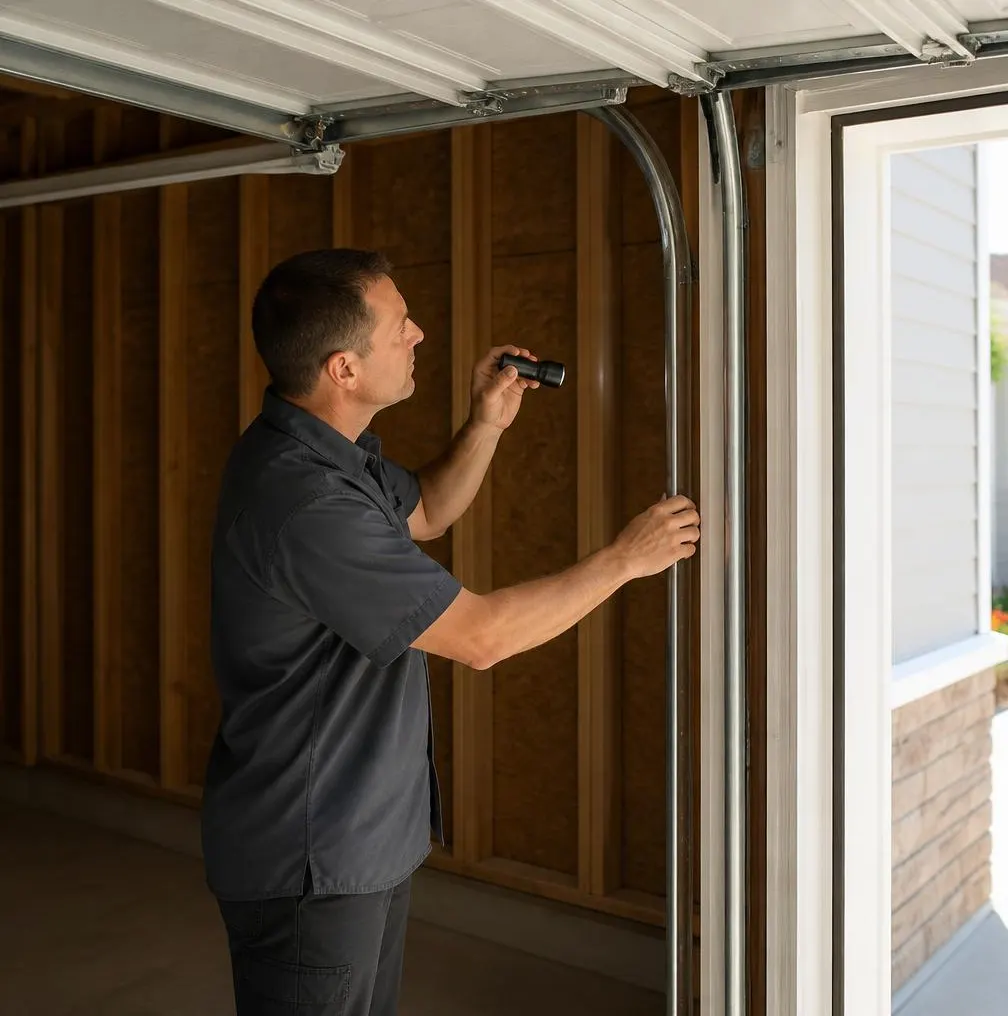
Rule of thumb: if you service your garage door once a year, do it in late fall, before the first hard cold snap rolls through central Alabama. The exceptions are homes with older torsion springs nearing the end of their cycle life, doors that already show rust streaks from a humid summer, and anyone who had storm damage they never got around to fixing — those situations call for attention now, not whenever the calendar says "winter."
Montgomery doesn't get brutal winters, but it does get real temperature swings — 70-degree afternoons followed by nights in the 30s, sometimes within the same week. That kind of expansion and contraction is harder on a garage door system than steady cold ever would be. Add in the humidity that never fully leaves the air here, and you've got a recipe for stiff springs, gummed-up rollers, and hardware that rusts quietly until it doesn't work at all.
Check the Springs Before the Cold Tightens Them Up
Metal contracts in cold weather, and torsion springs are no exception. A spring that's already fatigued from a long hot summer of daily cycling can lose just enough flexibility in a cold snap to snap outright — usually on the coldest morning of the year, right when you're late for work. Signs to watch for:
- A door that feels noticeably heavier to lift by hand than it used to
- A visible gap in the torsion spring coil (a clear sign it's already broken)
- Loud bangs or pops when the door opens or closes
- The opener straining or reversing partway through a cycle
Springs are rated for a number of cycles, not a number of years, so a door that gets used several times a day will wear out its springs faster than one used once or twice. If yours is original to a home that's 8-10 years old, it's worth having it inspected rather than waiting for it to fail. This is not a DIY repair — torsion springs are under enough tension to cause serious injury.
Lubricate for Temperature Swings, Not Just Noise
Most homeowners only grease their garage door when it starts squeaking. But lubrication matters more in fluctuating temperatures because thin, dried-out grease thickens up in cold weather and offers less protection right when metal parts are contracting. Use a silicone-based or lithium-based garage door lubricant (not WD-40, which is a cleaner, not a lubricant) on:
- Rollers and their stems
- The torsion spring itself
- Hinges between panels
- The track where rollers ride (a light coat, not a heavy one)
Do this now, before the first cold snap, and again partway through winter if you notice any stiffness or grinding.
Weatherstripping and Seals: Keep Moisture Out, Not Just Cold
The bottom seal and side weatherstripping on a garage door do double duty here — they block cold drafts, but more importantly in this climate, they keep wind-driven rain and ground moisture out of the garage during winter storm systems. Cracked, flattened, or torn weatherstripping lets water pool along the bottom of the door, which is exactly the kind of standing moisture that causes rust on steel doors and swelling on wood-composite ones. Run a hand along the bottom seal; if it's brittle or doesn't make full contact with the slab, replace it. It's an inexpensive fix that prevents a much bigger moisture problem.
Rust Check, Especially on Hardware
After a humid Alabama summer, hinges, track bolts, and the bottom corners of steel panels are the first places rust shows up. A light surface rust can usually be wiped down and treated with a rust-inhibiting spray before it spreads. If you see rust actually pitting the metal or flaking off in chunks, especially around the bottom panel or near the tracks, that's a sign moisture has been sitting there a while and the part may need replacing rather than just cleaning.
Test the Opener and Safety Sensors
Cold mornings are when battery-powered openers and remotes tend to reveal weak batteries — cold temperatures reduce battery output, so a remote that's been limping along all fall may stop working altogether in December or January. While you're at it:
- Wipe down the photo-eye sensors near the floor; humidity and dust buildup over the summer can cause false readings
- Test the auto-reverse function by placing a block in the door's path
- Replace the wall-mounted backup battery in the opener if your model has one and it hasn't been swapped in a couple of years
Don't Skip the Wind-Load Check
Winter in this part of Alabama still brings strong storm systems, even if they're not tropical. If your garage door was installed or last inspected before current wind-load expectations for the area, or if you've noticed the door flexing visibly during high winds, have the bracing and track anchoring checked. This matters just as much in a winter cold front with high wind gusts as it does during hurricane season.
When to Call Montgomery Garage Door Pro
If you're hearing grinding, seeing visible rust on hardware, noticing a gap in a spring coil, or your door just feels heavier or slower than it used to, that's the point to stop troubleshooting and call us. We handle Spring Repair & Replacement and full Garage Door Maintenance visits that cover lubrication, hardware inspection, weatherstripping replacement, opener testing, and a wind-load check in one appointment — so you're not finding out about a problem on a 35-degree morning when you're already running late.
Whether you're in Montgomery, Prattville, Wetumpka, Millbrook, Pike Road, Deatsville, Tallassee, or Elmore, give Montgomery Garage Door Pro a call before the cold snaps arrive. A short maintenance visit now beats a stuck door and a service call later.