
The mistake we almost made
Here's what I almost did: told the tenant "it's your garage door now, you deal with it" the second they signed the lease. It's tempting because it feels simple — they use it every day, so if it breaks, they broke it, right? But that's not how it works, and if we'd said that out loud to a tenant who later needed a new opener board or a spring replacement, we'd have been on the hook for the repair anyway once they pointed out we never did a move-in inspection. The real rule isn't "whoever touches it owns it." It's wear-and-age versus misuse, and you can't tell the difference after the fact if nobody wrote down the starting condition.
The actual dividing line
Garage doors fail two ways: they wear out, or someone breaks them. As the owner, we're generally responsible for anything that fails from normal age, weather, or mechanical wear — a torsion spring that's done its few thousand cycles, a panel rusting from humidity, an opener motor that's simply old. The tenant is generally responsible for damage from misuse or neglect — backing a car into the door, forcing it closed when it's stuck instead of reporting it, letting a kid use it as a basketball backboard, or ignoring a grinding noise for six months until the whole opener burns out.
The gray area is where couples argue, so let's name the gray areas directly:
- Rust on tracks or hardware: Given how much humidity and salt air we deal with here, some surface rust is expected wear, not tenant neglect — unless they left the door open during storms for weeks and water pooled inside.
- Swollen or sticking wood-look doors: Humidity swelling is a known local issue. That's on us as owners to maintain, not something to blame on the tenant.
- Misaligned safety sensors: Heat expansion and settling can knock sensors out of alignment over a season. That's wear. If a sensor is physically cracked or the wire is yanked out, that's damage.
- Dead remote batteries or a forgotten code: Tenant's problem, five-minute fix, not worth a dispute.
- Broken spring from "it was making noise for weeks": This one's genuinely shared. If they reported it and we sat on it, that's on us. If they never said a word and kept forcing a door that clearly needed help, that leans toward neglect.
What to actually inspect at move-in
This is the checklist that ends the argument before it starts, because it gives you a dated, signed record of condition. Walk the garage with the tenant present and do this together:
- Open and close the door manually with the opener disconnected. It should move smoothly with one hand and stay put wherever you let go. If it drifts up or crashes down, the springs are already failing — note it.
- Run the opener through a full cycle and listen. Grinding, popping, or a door that reverses on its own are pre-existing issues, not something the tenant caused on day one.
- Test the auto-reverse safety sensors by waving a hand or a broom handle across the beam while the door is closing. It should stop and reverse immediately. Photograph the sensor LEDs and note if either is blinking, which usually means misalignment.
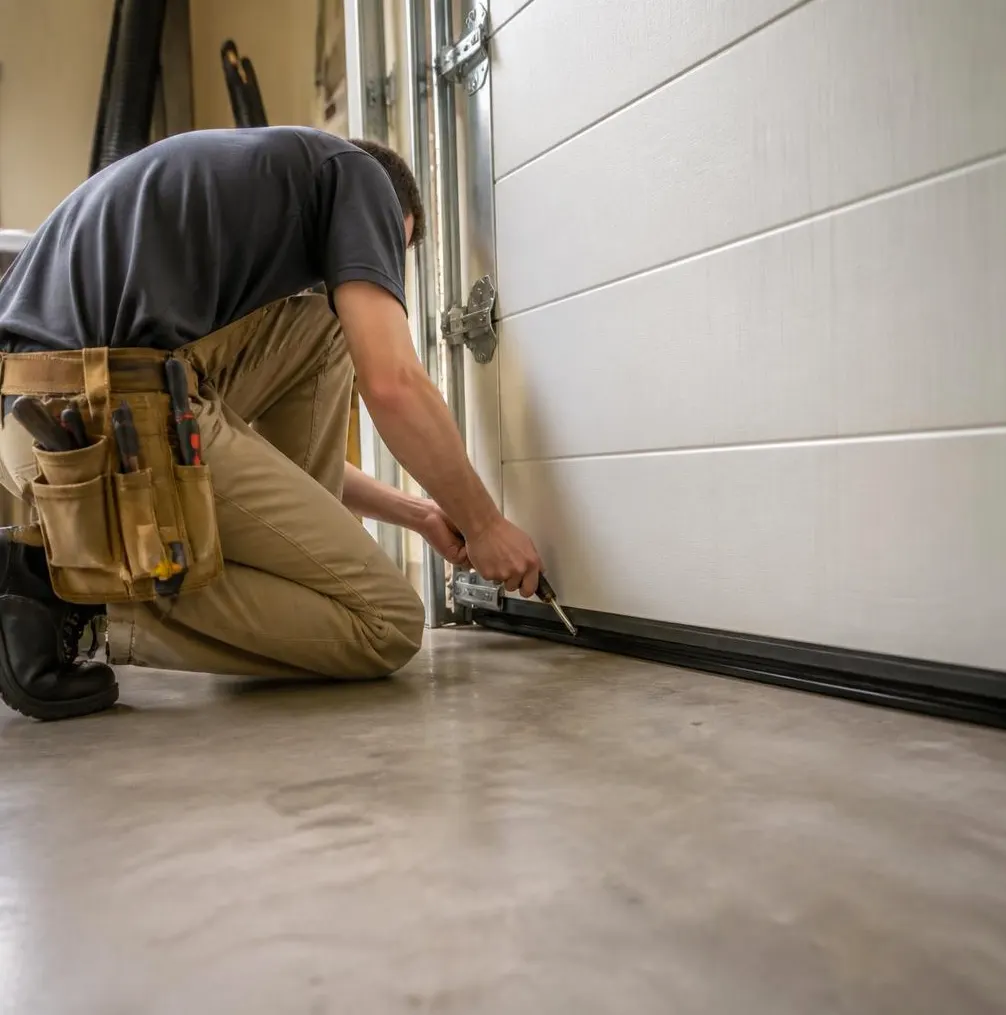
- Check the weatherstripping along the bottom and sides. Cracked or missing seals let in afternoon downpours and humidity — flag it now so it's not blamed on the tenant's tenancy later.
- Look for existing rust spots, dents, or panel scrapes and photograph them with a timestamp. This is the single most useful thing you can do — a photo beats a memory every time.
- Confirm the remotes and keypad work and write down how many remotes were handed over.
- Note the age of the door and opener if you know it, because an opener pushing 10-12 years old is simply due for replacement regardless of how carefully it's used.
Put this checklist, the photos, and both signatures in the lease file. It takes fifteen minutes and it's the difference between a calm phone call in a year and a screaming match over a $200-$400 spring replacement.
Write it into the lease, not just into memory
Whatever you agree on verbally will get forgotten or remembered differently by each of you. Put a short clause in the lease spelling out that normal mechanical wear and weather-related issues are the owner's responsibility, that tenants must report problems promptly, and that damage from misuse or failure to report is the tenant's cost. You don't need a lawyer to write two clear sentences — you need both of you to read the same sentence a year from now and agree on what it says.
When to call Montgomery Garage Door Pro
If you're an owner handing over a rental, have us do a pre-move-in inspection before the tenant ever touches the door — we'll check spring tension, opener function, sensor alignment, and weatherstripping, and give you a written baseline that's more thorough and more credible than a phone photo. If a tenant reports grinding, a door that won't stay up, or sensors that won't stop blinking, our garage door maintenance visit sorts out what's wear versus what's damage, and if it's a spring on its way out before hurricane season winds really get going, our spring repair and replacement service gets it handled before it fails on someone mid-cycle.
Whether you're the owner or the tenant, if you're in Montgomery, Prattville, Wetumpka, Millbrook, Pike Road, Deatsville, Tallassee, or Elmore and need an honest read on who's responsible for what, call Montgomery Garage Door Pro — we'll give you the straight answer and the repair, not just an invoice.