
What a Technician Sees on a Typical Call
The call usually starts the same way: a loud bang from the garage, then a door that won't budge or crashes down with no resistance. By the time a technician arrives, the homeowner has often already tried to 'take a look' — maybe loosened a bolt, maybe grabbed a winding bar they found online instructions for. Sometimes the spring is still wound tight and nobody has touched it, which is actually the safer scenario. The dangerous calls are the ones where someone has already started working on it themselves.
Why This Repair Is Different From Other DIY Jobs
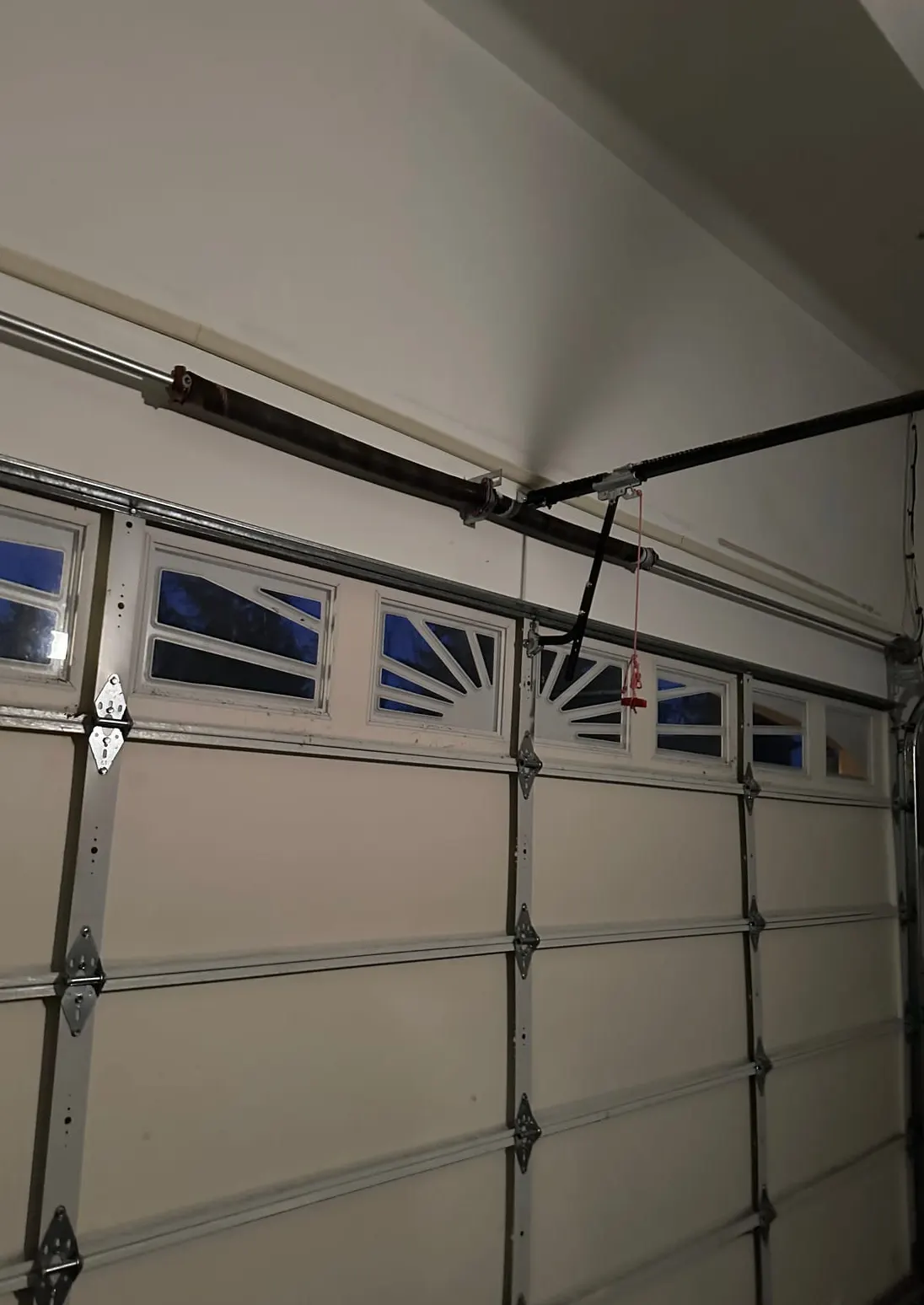
A standard torsion spring on a residential garage door is wound under hundreds of pounds of torque. That tension doesn't look dramatic sitting above the door, which is exactly the problem — it gives no visual warning of how much force it's holding. Extension springs, mounted along the horizontal tracks, carry similar stored energy. Either type can release that force in a fraction of a second if it slips off a winding cone, if a cheap bar bends, or if the spring itself snaps mid-adjustment.
Montgomery's climate adds a wrinkle most people don't think about. Humidity and afternoon downpours accelerate rust on spring coils and mounting hardware, especially on doors near the coastal side of the state where salt air speeds corrosion further inland than people expect. A corroded spring doesn't fail cleanly — it can weaken unevenly, which means it may let go with a sudden twist instead of a predictable release. That unpredictability is part of why even people who've watched a dozen videos get hurt.
How Badly It Goes Wrong
The injury patterns technicians hear about are consistent: crushed or broken fingers from a hand caught between coils, lacerations deep enough to need stitches from a spring segment flying loose, and blunt trauma to the face or chest when a winding bar slips and the stored tension transfers into the bar itself. Falling doors cause a separate category of injury — broken toes, fractured hands, and worse when someone is under or near the door when the spring gives out and the counterbalance disappears.
None of this requires a defective part or an unusual setup. It happens on ordinary doors, with ordinary tools, to people who are reasonably careful. The force involved doesn't leave much room for a small mistake.
What Actually Prevents It
- Don't disconnect or adjust a wound spring. If the spring is intact but the door won't move right, the fix is diagnostic, not mechanical — leave it wound until someone with the right tools is on site.
- Never use standard tools in place of winding bars. Screwdrivers and makeshift levers bend or slip under torsion load, which is how bars become projectiles.
- Keep the door closed and the opener unplugged if a spring has already broken. A door with a broken spring has no counterbalance, and manual attempts to open it can drop the full weight onto hands, feet, or a vehicle.
- Watch for warning signs before a full failure: a door that feels heavier than usual when opened manually, visible gaps in spring coils, or a loud pop followed by the door sagging. These usually mean the spring is close to failing, not that it already has.
- Check hardware condition seasonally, especially after hurricane-season storms, since wind-load stress and moisture exposure can loosen brackets or corrode springs faster than a dry climate would.
When to Call Montgomery Garage Door Pro
If a spring has snapped, looks rusted or stretched unevenly, or the door has started making a hard metallic pop during normal use, that's the point to call rather than troubleshoot. Our Spring Repair & Replacement technicians carry the correct winding bars, torsion tools, and replacement springs rated for the door's actual weight and wind-load requirements — not generic hardware-store substitutes. We also offer Garage Door Maintenance visits that catch spring wear and hardware corrosion before they turn into a sudden failure, which matters here given how quickly humidity and storm cycles can age exposed metal parts.
If your garage door in Montgomery, Prattville, Wetumpka, Millbrook, Pike Road, Deatsville, Tallassee, or Elmore is showing any of these signs, call Montgomery Garage Door Pro before it becomes an emergency room story instead of a service call.