
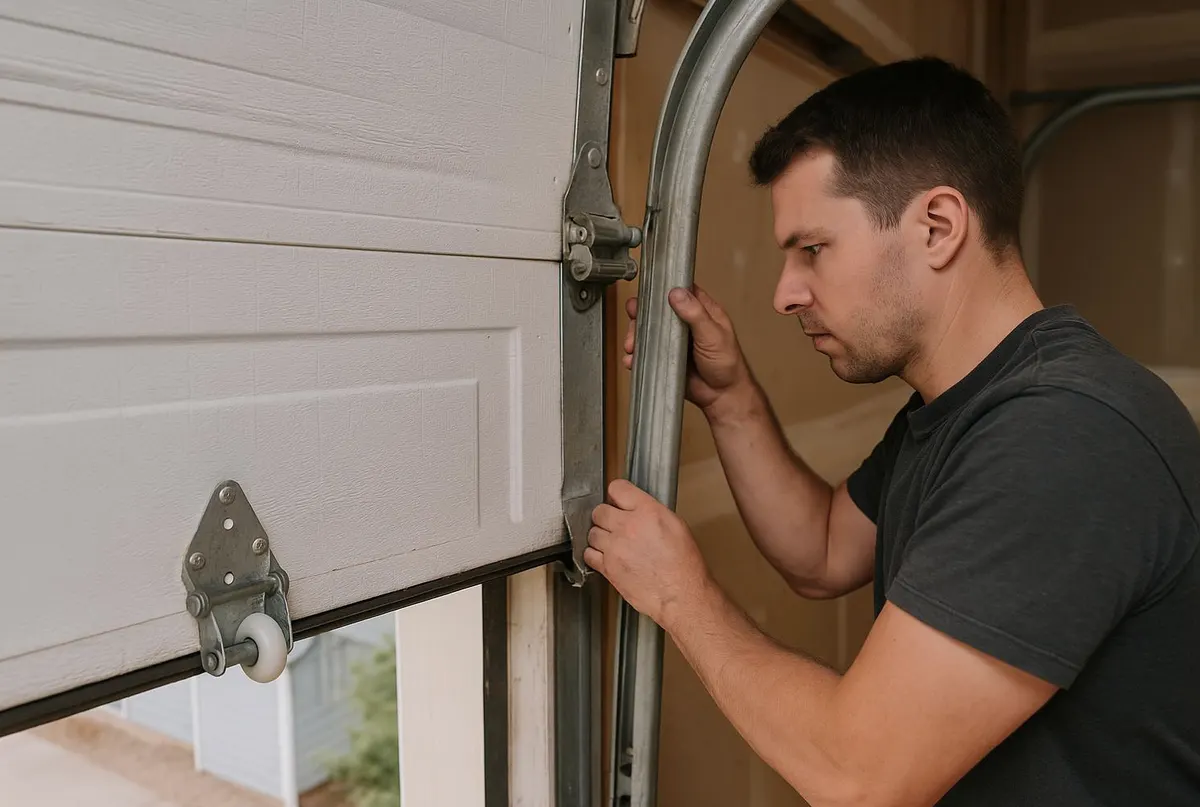
What a Technician Sees on a Typical Call
Most calls about this start the same way: one spouse points at the bottom panel and says it needs to be replaced. The other says it's just dirt and a coat of paint will fix it. When a technician shows up, the pattern is usually familiar—rust bubbling up along the bottom 6 to 12 inches of a steel door, hinges and roller brackets with orange streaks running down the panel below them, and sometimes a section that looks slightly bowed or wavy when you sight down the door from the side. On older wood-composite doors, the bottom corners might feel soft or spongy, and the paint near the ground is cracked and lifting. None of this is random—it's what happens when a garage door sits through humid summers, afternoon downpours, and sprinkler overspray for years without a look at the bottom seal and weep holes.
Rust and Swelling Are Different Problems
They get lumped together in arguments, but they come from different causes and need different fixes.
Rust
Steel doors have a factory coating, but once that coating is scratched, chipped, or worn through—by a bike pedal, a car bumper tap, or just years of moisture sitting against the metal—bare steel is exposed. Humidity does the rest. You'll usually see it first at the bottom panel (closest to standing water and splashback), around hinge bolts (where the coating gets stressed), and near weep holes that have been painted over or clogged with debris, trapping moisture against the metal instead of letting it drain.
Swelling
Swelling is mostly a wood and composite-door issue, though steel doors with wood-look overlays or insulation can show a version of it too. Moisture gets into seams, screw holes, or damaged edges and the material absorbs water like a sponge. The telltale sign is a door that used to open and close smoothly but now drags or binds, especially at the bottom, because the panel has physically gotten thicker in spots. Unlike rust, swelling often isn't visible from the front—you feel it in how the door moves before you ever see it.
Cosmetic or Structural? Here's How to Tell
- Surface rust that wipes off or scrapes away easily, with solid metal underneath, is cosmetic. It needs attention so it doesn't spread, but it's not an emergency.
- Rust that's flaking and leaves pitted or thinned metal underneath is structural. That panel is weaker than it looks, and it's a candidate for wind-load concerns during storm season.
- Swelling that hasn't distorted the door's movement is still repairable—dry it out, seal it, repaint it.
- Swelling that's causing the door to bind, stick, or not seat evenly in the tracks usually means the panel has already warped and painting over it won't fix the underlying shape.
What to Actually Do About It
- Clear the weep holes. Most steel doors have small drainage holes along the bottom edge. If they're painted shut or packed with dirt, water sits against the metal instead of draining out.
- Sand and treat small rust spots down to bare metal, then use a rust-inhibiting primer before repainting. Skipping the primer just means the rust comes back under new paint within a season.
- Check and replace the bottom weather seal. A cracked or flattened seal lets water sit directly against the panel instead of shedding it, which is often the real root cause behind both rust and swelling at the bottom edge.
- Keep sprinklers and downspouts pointed away from the door. Constant wetting from landscaping is one of the most common and most avoidable causes of repeat rust.
- For swelling, let the material dry completely before sealing it up again. Sealing in trapped moisture just continues the damage from the inside.
When It's Repair vs. Replace
A panel or two with surface rust or minor swelling can usually be treated and sealed. But if rust has eaten through metal, or a wood/composite door has swollen and warped across multiple panels, patching it is a short-term fix. At that point you're weighing repair cost against the fact that a compromised panel is a weak point during hurricane-season wind events, which matters more here than in drier climates.
When to Call Montgomery Garage Door Pro
If you're not sure whether what you're looking at is cosmetic or structural, that's exactly the call to make before anyone spends money fixing the wrong thing. Our Garage Door Maintenance visits include checking weep holes, seals, hardware, and panel condition, so you get a straight answer instead of a guess. If a panel or door is too far gone, we'll walk you through Garage Door Installation options built for Montgomery's humidity and storm exposure, not a generic national spec.
If you're in Montgomery, Prattville, Wetumpka, Millbrook, Pike Road, Deatsville, Tallassee, or Elmore and want a second opinion before the argument goes any further, call Montgomery Garage Door Pro and we'll take a look.