
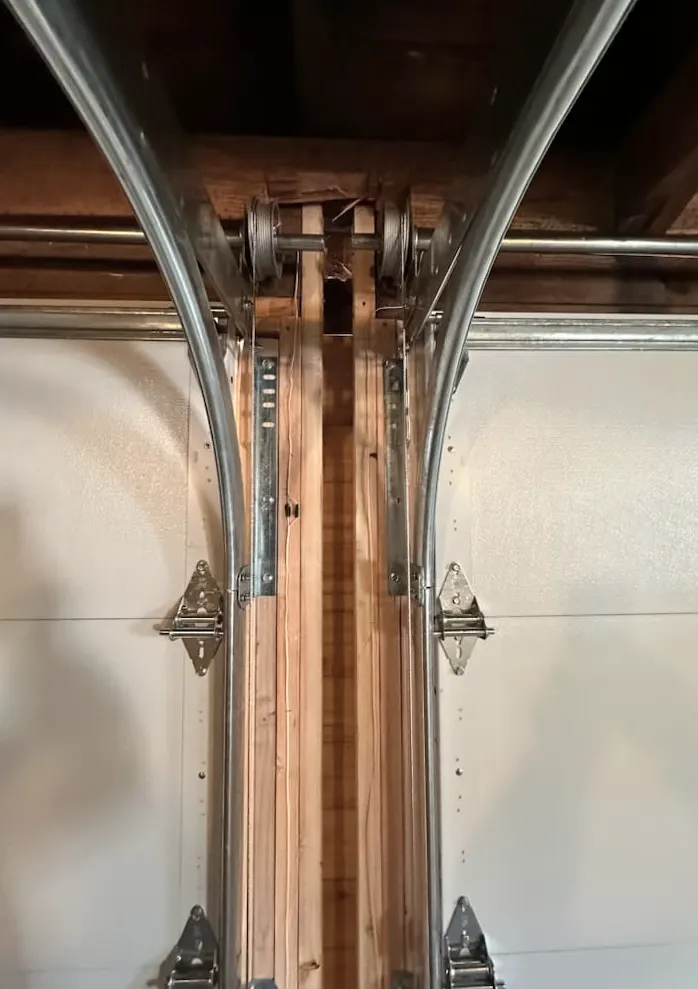
The short answer
Stop using the door immediately, keep everyone (including pets and vehicles) away from the opening, and do not try to force the panel back into the track yourself. If the door is partway open, leave it there and disconnect the opener. Call a technician who can assess whether a cable, spring, roller, or bent track caused the problem before anything moves again.
That sounds simple, but a door off its track is one of the few garage door problems that can genuinely hurt someone in the time it takes to "just push it back in." Here's why, and exactly what to do and avoid.
What actually goes wrong when a door jumps the track
A garage door doesn't come off its track for no reason. Something upstream failed first, and the track separation is usually the visible symptom, not the root cause. The common culprits around here:
- A snapped cable or broken spring. The torsion spring and cables hold most of the door's weight. When one lets go, the panel can tilt, bind, and jump the roller track on one side while the other side stays seated — leaving the door hanging crooked.
- Wind load during a storm. Afternoon downpours and hurricane-season gusts can push against a closed door hard enough to flex panels and pop rollers out of worn or slightly misaligned track, especially on older doors that predate current wind-load hardware.
- A bent track from impact. A car bumper, a basketball, or a trailer hitch clipping the track edge can dent it just enough that rollers ride up and over instead of staying seated.
- Worn rollers or a loose bottom bracket. Humidity swings make wood and wood-composite panels swell and shrink over the year; combined with corroded or worn rollers, the extra friction can pull a roller out of alignment until it jumps the rail entirely.
How badly this can go wrong
This isn't a cosmetic issue. A standard garage door can weigh well over a hundred pounds, and most of that weight is normally balanced by springs under serious tension. When the door is off its track, that balance is disrupted:
- The door can fall suddenly if it's only being held by one track or a single roller.
- A damaged spring or cable can release stored tension violently, and a whipping cable or coil can cause real injury.
- Forcing a misaligned panel can bend the track further, crack a panel, or pull the opener's drive mechanism, turning a repair into a full replacement.
- A door resting unevenly on its tracks can shift without warning while someone is reaching underneath it or backing a car out.
None of that is meant to scare you into inaction — it's meant to explain why the right first move is to leave the door alone and remove people from the danger zone, not to start troubleshooting hardware you can't see clearly.
What to do in the first few minutes
- Keep people and pets clear. Treat the area under and around the door like you would a ladder that's about to fall. No one reaches in to "just nudge it."
- Don't touch the opener remote or wall button. If the opener tries to run the door through a broken track, it can tear the panel, strip the drive gear, or snap a cable that's still partially under tension.
- Unplug the opener or disconnect it at the breaker. This removes the chance of the door moving unexpectedly while you're inspecting or waiting for help.
- Leave the emergency release cord alone if the door is already off track and hanging unevenly. Pulling that cord disengages the opener from the door, which can let an unbalanced panel drop. Only use the release if the door is still fully seated and you need to move it manually in a controlled way — if it's already jumped the track, skip this step.
- Do a visual check from a safe distance. Look for an obviously snapped cable, a spring with a visible gap in its coils, or a track that's bent or pulled away from the wall. You're gathering information for the technician, not attempting a fix.
- Move vehicles and anything valuable out of the path if you can do so without going near the door itself.
What not to do, even if it looks like an easy fix
- Don't try to lift or shove the panel back onto the rollers by hand.
- Don't cut or loosen a cable, even a frayed one, to "relieve pressure."
- Don't loosen the track mounting bolts to try to wiggle the door back into alignment.
- Don't attempt the repair yourself if a spring is involved — the tension stored in a torsion or extension spring is the single most common cause of garage door injuries, and it's not something to learn on the fly.
When to call Montgomery Garage Door Pro
Any time a door comes off its track, that's a same-day call, not a weekend project. When we arrive, we check the whole system in order: springs and cables first (since a failure there is usually the real cause), then rollers, track alignment, and the bottom bracket. If the track is bent from impact or storm wind-load, we can usually straighten or replace that section as part of our Garage Door Repair service. If a spring or cable has failed, that gets handled through Spring Repair & Replacement, done under controlled tension with the right tools — not guesswork. We'll also check the opener's travel limits and force settings afterward, since a door that's jumped track once often needs a small recalibration to run smoothly again.
If your garage door has come off its track anywhere in Montgomery, Prattville, Wetumpka, Millbrook, Pike Road, Deatsville, Tallassee, or Elmore, call Montgomery Garage Door Pro. We'll get a technician out, assess what actually failed, and get the door back on track safely — the first time.