
The One Test Everyone Runs, and Why It Tells You Almost Nothing
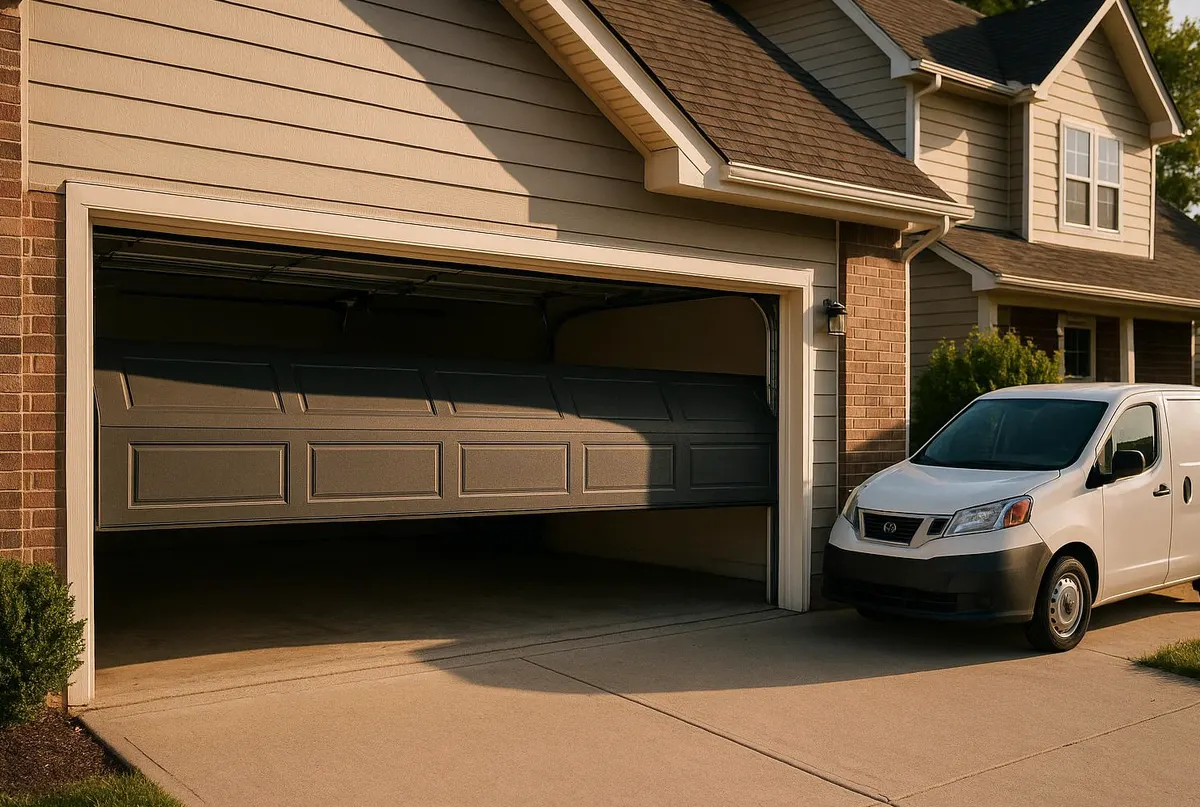
The first thing most buyers do in a garage is press the wall button, watch the door glide up and down once, and move on to the kitchen. It's tempting because it's fast, it's visible, and honestly, it's close to what a lot of home inspectors do too: one cycle, no resistance noticed, box checked. The problem is that an opener motor can mask a lot of sins. A door can look smooth on camera while a weak spring is making the motor strain, or while a track is bent just enough to bind without stalling the door completely. None of that shows up in a single up-and-down pass.
If you're closing on a place in Montgomery, Prattville, Wetumpka, Millbrook, Pike Road, Deatsville, Tallassee, or Elmore this fall, give the garage ten more minutes before you sign anything. Here's what to actually check, and what it means if each one fails.
The Walkthrough Checklist
1. Disconnect the opener and lift the door by hand
Pull the red release cord so the opener is out of the loop, then lift the door yourself. A properly balanced door should move smoothly and stay put at about waist height on its own. If it crashes down or you have to muscle it up, the springs are worn or mismatched to the door's weight. This is one of the most common things a quick opener test hides completely, since the motor just compensates for the imbalance until it can't anymore.
2. Look closely at the springs
Torsion springs sit on a bar above the door; extension springs run along the upper tracks. Check for rust pitting, visible gaps stretched between coils, or a spring that looks like it's sagging compared to its neighbor. Humid Alabama summers accelerate spring corrosion faster than drier climates, so a spring that looks fine on a newer build up north can be further along here than its age suggests.
3. Check the bottom brackets and rollers for rust
Afternoon downpours tend to splash water right at the base of the door, and that moisture sits on the bottom brackets and rollers longer than you'd expect in a closed garage. Surface rust is cosmetic; flaking or pitted rust on the brackets themselves is a sign they're weakening and could fail under the spring's tension, which is a safety issue, not just an eyesore.
4. Inspect panels for swelling or delamination
Wood and wood-composite doors absorb humidity over time. Press on the bottom few panels. Soft spots, visible swelling, or separation between layers mean moisture has gotten into the material, and that section will only get worse, not better, with another wet summer.
5. Check the bottom seal and weatherstripping
A cracked, torn, or missing bottom seal lets water, insects, and small critters into the garage during storms. It's a cheap fix on its own, but it's also a clue about how well the rest of the door has been maintained.
6. Test the auto-reverse safety sensors
Close the door and wave a broom handle through the sensor beams near the bottom of the track. The door should reverse immediately. If it doesn't, or if the sensors are misaligned, that's a safety problem that needs attention before anyone, especially kids or pets, is around that door.
7. Check the opener's age and whether it has battery backup
Openers typically last eight to fifteen years depending on use. Ask when it was installed if there's any paperwork. A unit without battery backup will leave the door stuck shut (or open) during a power outage, which matters more here given how storms can knock out power for hours at a time.
8. Look at track alignment
Stand back and sight down the vertical tracks on both sides. Gaps between the rollers and the track, or a track that's visibly bent or pulled away from the wall, means the door has either been hit or has been running out of alignment for a while, both of which accelerate wear on everything else.
9. Ask about the door's wind-load rating
Older doors in this area weren't always built or braced to current wind-load standards. If the house is in an area with stricter requirements, or if you just want peace of mind heading into hurricane season, it's worth asking what rating the existing door carries.
When to Call Montgomery Garage Door Pro
If the hand-lift test feels off, if you spot rust creeping into the brackets, or if the sensors aren't reversing the door reliably, that's the point to call in a second opinion before closing or shortly after move-in. Montgomery Garage Door Pro can run a full Garage Door Maintenance check to catch exactly these issues, and if the springs are shot or mismatched, our Spring Repair & Replacement service gets the door back to a safe, balanced lift without you having to guess at the right spring size yourself.
New house, new-to-you garage door: let's make sure it's actually sound. Call Montgomery Garage Door Pro today to get your Montgomery, AL garage checked out before move-in day.